
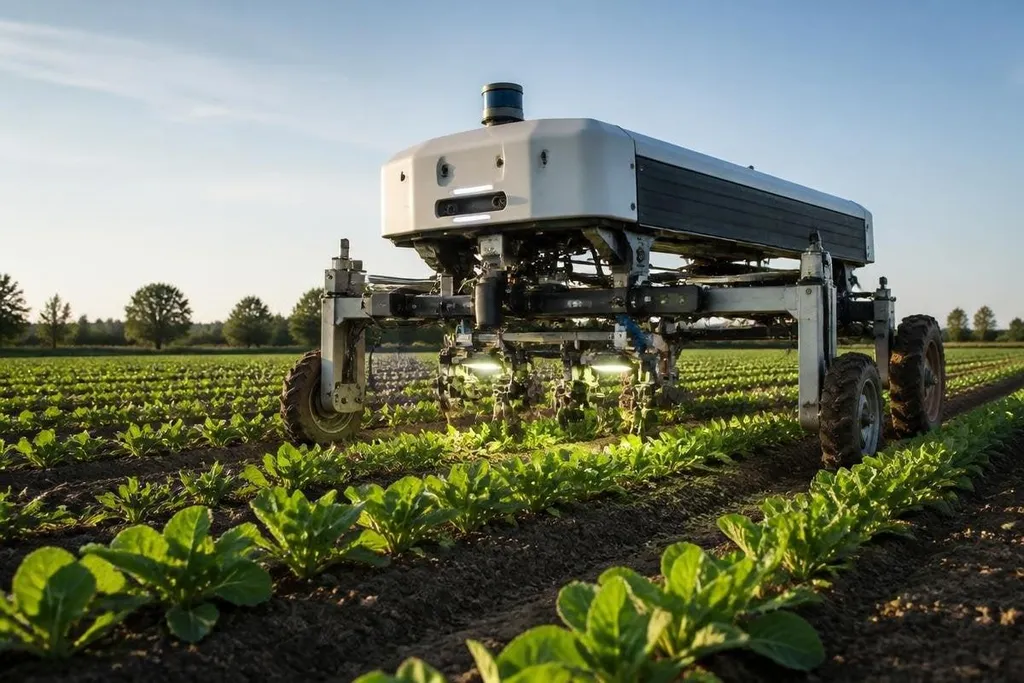
Weeding robots are moving toward a harder job than spotting green plants. They must tell crops from weeds, work around stems, and remove unwanted plants without slowing the farm down.
This article focuses on the machine changes that matter most for a grower deciding where automation may fit.
Quick read
- Plant-level vision should reduce the need to treat whole rows.
- Mechanical tools may cut chemical use, but they must avoid crop roots.
- Reliable field work depends on localization, weather handling, and easy maintenance.
Seeing each plant instead of treating the row
A basic field robot can follow a row. A more useful weeding robot needs to identify each crop and each weed inside that row. That calls for cameras, image processing, and a clear view of the soil around the plants.
The hard part is variation. Leaves change size as crops grow, soil can be light or dark, and weeds may sit partly behind crop leaves. A system that works during one growth stage can lose accuracy later, so plant recognition needs to work across the season.
The practical gain is selective action. A robot could direct a tool at one weed instead of applying treatment across the full planted area. That matters most where crops are spaced closely and hand labor remains costly.
That distinction makes field evidence more useful than a polished demo. Weeding robot reporting from Robot24.com can connect a machine’s weed target, row spacing, tool type, test date, and treatment result before the next section looks at how it removes plants.
Removing weeds with precise tools
Vision only finds the target. The robot still needs a safe way to remove it.
Mechanical weeding is one path. A blade, tine, hoe, or small rotary tool can disturb the soil near a weed. The robot must control depth and position closely enough to avoid cutting crop stems or damaging roots. Small errors can cost plants across an entire row.
Other systems may use directed heat, electrical treatment, or a focused spray. Each method has a different operating limit. Heat needs a clear target, electrical tools need contact or close range, and spray systems must control drift and dose.
The useful change is control at plant level. A broad tool treats an area. A precise tool acts on a target, which can reduce wasted treatment and lower the amount of soil disturbed.
Moving accurately through uneven fields
The machine can identify a weed and still miss the job if it cannot hold its path. Fields contain ruts, loose soil, slopes, crop gaps, and changing light. The vehicle needs localization, which means estimating its position, plus control software that keeps the tool over the intended line.
Global navigation satellite systems can help with position, but satellite signals alone may not show the exact place of a crop stem. Cameras, wheel movement sensors, and other sensors can help the robot correct its path as it moves.
Speed also matters. A slow robot may remove weeds carefully but cover too little ground. A faster robot may damage crops if its view, steering, or tool timing cannot keep up.
The useful measure is not travel speed on an empty track. It is the number of weeds removed per hour while crops remain intact.
Working through weather and crop growth
Outdoor robots face conditions that a controlled test area avoids. Rain can change soil firmness. Dust can cover camera lenses. Bright sun can alter the image, while tall crops can hide weeds from a low camera.
The machine also needs to handle growth. A tool position that works beside a small plant may be unsafe when the same plant has larger leaves or exposed roots. Operators need a way to adjust crop settings without rebuilding the whole system.
That points to a less visible breakthrough: better setup and service tools. A robot that can be cleaned, checked, and adjusted by farm staff has a better chance of staying in use than one that needs a specialist for every field change.
What to check before buying
The right decision depends on the crop, row layout, soil, and labor plan. Use this checklist when comparing a system:
- Target crop: Confirm the robot can identify the crop at the growth stages you need.
- Weed method: Ask how the tool removes weeds and what happens when the target is partly hidden.
- Field speed: Check working speed during weeding, not only the vehicle's top speed.
- Crop damage: Ask for measured results from fields similar to yours.
- Daily service: Check how staff clean sensors, change tools, and handle blocked equipment.
I'd watch plant-level recognition and tool control before chasing a higher driving speed. One that covers more ground while missing weeds or damaging crops creates extra work for the farm.
The open question is simple: can these machines keep their accuracy after weeks of dust, rain, crop growth, and routine field service? That answer will decide which weeding robots move from trials into regular farm work.